



The best place for an RV electrical hookup is near the spot where you usually park, with the outlet positioned so your RV’s power cord reaches without stretching or crossing a walkway or driveway. Before an RV outlet installation, TNT Electric Co. looks at how you park, where the RV’s power inlet sits, and how the circuit can reach that location.
A little planning can make the hookup easier to use every time you bring the RV home. The right spot should work with your parking routine, keep the cord out of traffic, and allow an electrician to install the correct receptacle and circuit for your RV.
Start With Your RV’s Parking Position
Park the RV where it will normally sit while plugged in. Then check where the shore-power inlet sits on the vehicle. It might be near the rear, along one side, or in another location depending on the model.
That inlet location determines which side of the parking area makes the most sense for the receptacle. If you park a motorhome nose-in, for example, the best outlet location may differ from the one you’d choose for a travel trailer that backs into the same space.
Think about the full parking routine, too. Will you need room to open the RV’s doors, extend slide-outs, or access storage compartments? Could another vehicle block the outlet or the RV’s power inlet? A spot that works only when the driveway is empty may become inconvenient during everyday use.
Keep the Power Cord Short, Clear, and Easy to Reach
Choose a location that lets the RV’s factory cord reach comfortably, with some slack. A cord under tension can put strain on its connections. Avoid a setup that sends the cord through a pedestrian route, under a tire, across a driveway, or through a door or window.
Walk the route between the RV’s power inlet and the proposed outlet. Look for places where someone could trip or where a vehicle could run over the cord. If the cord has to cross a path used by people or cars, the outlet probably needs a different location.
A short, direct connection also reduces the need for extension cords. Adapters and cords each add another connection point, so they’re better suited to occasional use than to solving a permanent placement problem. For regular use at home, plan the receptacle around the RV’s parking position and cord reach.
Balance Outlet Location With the Electrical Route
The most convenient place for the outlet may not be the shortest route from the electrical panel. A location near the panel can make the circuit route more direct, while a parking spot farther away may require a longer run or a different route across the property.
That distance matters during planning. The electrician needs to consider the circuit, the wiring route, the outlet location, and the electrical panel’s available capacity. An open breaker space alone doesn’t confirm that the panel can support the added load.
If the RV parks near a detached garage or along the side of the house, discuss whether the wiring can follow an accessible route or needs to cross a driveway or landscaped area. The installation plan should account for the property’s layout before anyone settles on a mounting location. Depending on the route, the work could involve exterior conduit, trenching, or other wiring methods.
Our recent guide to 30-amp versus 50-amp RV outlet installation explains how the RV’s service type, panel, and circuit requirements affect the project. Outlet placement is one part of the plan, but the electrical setup still needs to match the RV.
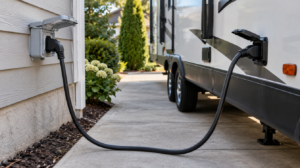
Choose a Spot That Stays Accessible
You should be able to reach the receptacle without moving stored items, squeezing between equipment, or stepping into the RV’s parking path. Leave enough room to plug in and disconnect the cord without pulling on it or putting yourself in an awkward position.
Consider what might change over time. A new fence, storage shed, landscaping, or parking arrangement could block an outlet that seems accessible today. If the RV sometimes parks in more than one place, let the electrician know. The best location depends on whether you want to power one regular parking spot or accommodate occasional changes.
Also think about where the outlet will sit in relation to sprinklers, standing water, vehicle impact, and outdoor storage. An electrician can select the appropriate equipment and protection for the installation conditions and confirm the requirements that apply locally.
The RV Industry Association’s guidance on RV electrical grounding and safety explains why proper grounding and correctly wired receptacles matter. A receptacle that looks right from the outside still needs to be wired and tested for its intended use.
Don’t Choose a Spot Based Only on an Existing Outlet
A nearby household receptacle isn’t automatically suitable for an RV. The RV’s plug type, voltage, circuit rating, and grounding requirements all matter. A standard outlet and an RV receptacle can look similar while serving different electrical needs.
The outlet should match the RV’s shore-power connection and the way you expect to use the vehicle. If you’re unsure which service your RV needs, check the owner’s manual or the markings on its power cord before discussing installation.
Do not assume that an existing dryer or range outlet will work because its plug or amperage looks similar. The wiring and configuration must be verified for RV use. Our electrical services in Citrus Heights and Greater Sacramento include panel work, dedicated circuits, subpanels, and residential electrical projects that can be part of an RV hookup.
What to Share Before the Installation
A few details can make the site evaluation more useful. Have the RV’s make and model available, along with the plug type or electrical requirements from the owner’s manual. It also helps to identify the usual parking position and show where the power inlet sits on the RV.
If you have a photo of the parking area and the electrical panel, keep those handy. Point out any gates, walkways, retaining walls, trees, concrete, or other features that could affect the route. Mention whether you expect to change vehicles or parking arrangements soon.
Those details give the electrician a clearer picture of both the desired outlet location and the work needed to connect it. The electrical panel, circuit route, mounting surface, and outdoor conditions all shape the final plan.
Plan the Outlet Around the Way You Park
For most properties, the best RV hookup sits near the RV’s regular parking space, on the side that aligns with the shore-power inlet. The cord should reach with slack and stay clear of walkways, vehicle paths, and doors. The location also needs to remain accessible and suit the outdoor conditions.
At TNT Electric Co., we handle dedicated circuit and outlet work for homeowners in Citrus Heights and the Greater Sacramento area. If you’re planning an RV outlet installation, share your RV’s plug type, parking position, and preferred outlet location with us. Contact TNT Electric Co. to discuss the project and request an estimate.
Our Services at a Glance
At TNT Electric, we are a licensed electrical company based in Citrus Heights, CA, proudly serving the Sacramento area with dependable, professional service.
View Services

