

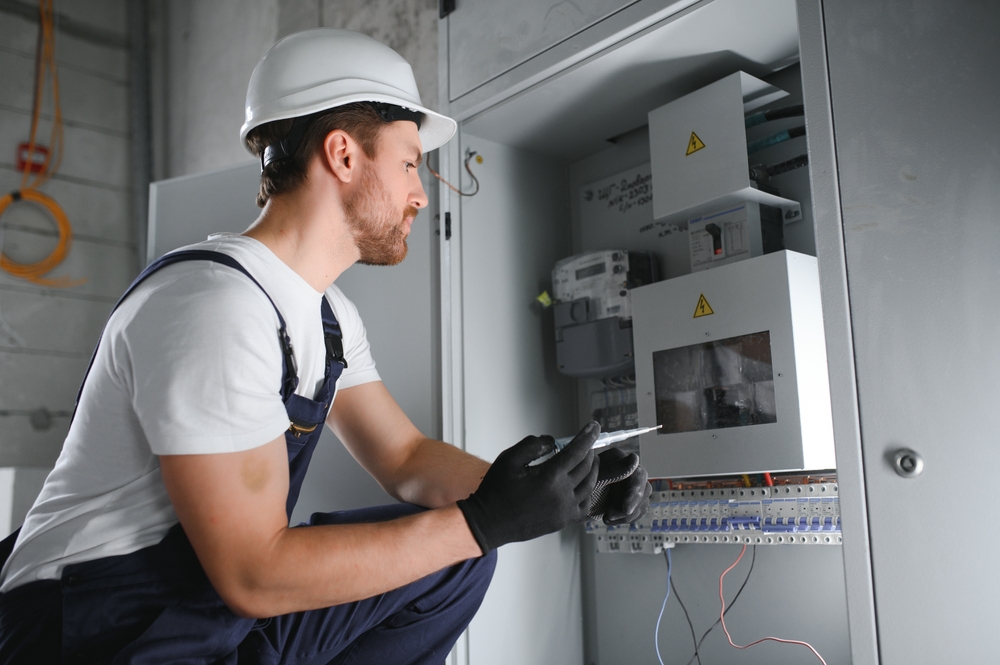
The Greater Sacramento region—specifically the massive logistics corridors of North Natomas, West Sacramento, and the Power Inn Road district—is currently experiencing an industrial boom. As e-commerce and local distribution centers expand to meet the demands of Northern California, the complexity of the electrical systems powering these facilities has increased exponentially.
A warehouse is not just a storage box; it is a high-energy environment. Between massive LED High-Bay Lighting Systems, high-amperage forklift charging stations, and complex conveyor motor controls, the potential for an electrical fire is a constant, “invisible” threat. According to the NFPA (National Fire Protection Association), electrical distribution and lighting equipment are leading causes of fires in industrial properties.
At TNT Electric, we specialize in the Light Industrial and Warehouse Electrical Services required to keep these facilities safe. This guide is an exhaustive resource on warehouse fire prevention, focusing on the specific technical hazards of the industrial environment and how Sacramento managers can protect their inventory, their building, and their team.
Part I: The “Silent Killer” – Dust, Debris, and Heat
In a warehouse, the environment itself is often the primary cause of electrical failure. Unlike a clean professional office, a Sacramento Warehouse is subject to constant dust, cardboard fibers, and ambient heat.
1. The Insulating Effect of Dust
Dust is more than just a nuisance; it is an insulator. When dust settles inside an electrical panel or on top of a transformer, it prevents heat from dissipating.
- The Fire Risk: As heat builds up, the copper wiring inside your Commercial Service Panel becomes brittle. Eventually, the insulation melts, causing a “short-to-ground” that can spark an immediate fire.
- The Solution: We provide “De-energized Cleaning” as part of our Commercial Service Work, using specialized vacuums to remove conductive dust from your critical infrastructure.
2. Cardboard and Packing Material
Warehouses are full of “fuel.” Stacks of dry cardboard boxes and plastic shrink-wrap are highly flammable. If an electrical spark occurs—known as an “Arc Flash”—these materials ignite instantly.
- The Safety Radius: NEC code requires a 36-inch clear space in front of all electrical panels. In a busy Tenant Improvement (TI) Buildout, this space is often encroached upon by pallets. Keeping this area clear is your #1 fire prevention rule.
Part II: Forklift Impact and Conduit Integrity
In a fast-paced logistics center, forklifts and pallet jacks are constantly in motion.
1. The Danger of Mechanical Impact
We frequently see Commercial Electrical Repair calls where a forklift has “clipped” a conduit run or a panel board.
- The Hidden Break: The conduit might look fine on the outside, but the impact can “pinch” the wires inside. This creates a high-resistance point where heat builds up every time a machine is turned on.
- Safety Bollards: Part of a professional Warehouse Electrical Plan includes the installation of physical bollards or guardrails to protect your main switchgear and distribution boards.
2. Forklift Charging Stations
Charging a fleet of electric forklifts puts a massive strain on your building’s electrical “bones.”
- Thermal Stress: Charging batteries for 8 hours creates significant heat in the charging cables and the dedicated circuits.
- The Risk: If the Main Service Panel isn’t properly torqued, these long-duration loads will cause the connections to loosen and arc.
Part III: Preventative Maintenance – The Infrared Advantage
The most effective way to prevent a warehouse fire is to find the problem before it creates smoke. At TNT Electric, we use Infrared (IR) Thermography.
1. Finding “Hot Spots”
An IR camera allows a Sacramento Commercial Electrician to see the temperature of your breakers and wires without touching them.
- The Identification: A “Hot Spot” is an early warning of a loose connection, an overloaded circuit, or a failing breaker.
- The Fix: By identifying these during a scheduled Commercial Maintenance Audit, we can replace the faulty component before it results in a total power loss or a fire.
2. Torque Testing
Sacramento’s extreme seasonal temperature swings (from 35°F in winter to 110°F in summer) cause metal to expand and contract. This “thermal cycling” naturally loosens the screws in your electrical panels. We perform “Torque Testing” to ensure every lug is tightened to the manufacturer’s exact specification, eliminating the #1 cause of industrial arcing.
Part IV: High-Bay Lighting and Title 24 Safety
Lighting is the most extensive electrical system in your warehouse. If it’s outdated, it’s a fire risk.
1. The Hazard of Metal Halide Ballasts
Old Metal Halide fixtures use ballasts that can reach temperatures of over 300°F. When a ballast fails, it can “melt down” and drip molten material onto the inventory below.
- The LED Solution: LED High-Bay Retrofits run significantly cooler and lack the dangerous pressurized gases found in older bulbs.
2. Emergency Lighting Compliance
In a fire, the power often goes out. If your warehouse is dark, your team cannot find the exits.
- Path of Egress: We ensure your emergency battery-backup lights are fully functional. In a Large-Scale Warehouse Buildout, these must be tested monthly to satisfy the Sacramento Fire Marshal.
Part V: Power Distribution & Load Management
As warehouses modernize with conveyors and automated sorting, the power load increases.
1. The Danger of “Daisy-Chaining”
We often see warehouse offices or “shipping stations” using multiple power strips plugged into one another. In a Commercial Service environment, this is a recipe for a fire.
- The Correct Way: We install dedicated Tenant Improvement Style Outlets for every workstation, ensuring that high-draw printers and computers are on their own protected circuits.
2. Load Balancing for 3-Phase Power
Most Sacramento warehouses run on 3-Phase Power. If your electrical loads aren’t balanced across all three phases, your main transformer will run hot and eventually fail. We perform load balancing audits to ensure your system is operating at peak efficiency.
Part VI: The “Sacramento Summer” Factor
Sacramento’s heat is a unique challenge for industrial electrical systems.
1. Ambient Temperature De-rating
Electrical components are rated based on ambient temperature. When a warehouse ceiling hits 120°F, your breakers can no longer handle their full rated load. They will “nuisance trip” or, worse, stay on until they melt.
- VFD Cooling: If your facility uses Motor Controls and VFDs, they must be located in ventilated enclosures to prevent thermal runaway during a heatwave.
Part VII: Training Your Team for Electrical Safety
Your employees are your eyes and ears on the warehouse floor. They should be trained to look for “red flags”:
- Flickering Lights: A sign of a loose neutral or failing ballast.
- Burning Smells: Often described as “fishy” or “ozone”—this is an immediate emergency.
- Warm Switches or Outlets: Indicating a high-resistance connection.
- Buzzing Panels: Signifying internal arcing.
If any employee notices these, they should immediately contact a Commercial Service Electrician.
Conclusion: Prevention is Cheaper than a Fire
An electrical fire in a warehouse is a catastrophic event. It doesn’t just destroy inventory; it halts your supply chain, leads to massive insurance hikes, and puts lives at risk. In the competitive Sacramento logistics market, you cannot afford to be reactive.
At TNT Electric, we believe in a “Safety-First” approach to industrial power. We provide the Specialized Warehouse Maintenance and Service Work required to protect your investment. We don’t just “fix things”—we build systems that are designed to pass the most rigorous safety standards.
Is your warehouse a ticking time bomb or a safe logistics hub?
Contact TNT Electric today for a Professional Warehouse Electrical Safety Audit.
