Sacramento boasts some of the most beautiful historic neighborhoods in California. From the tree-lined streets of East Sacramento to the classic architecture of Land Park and Midtown, older homes offer undeniable character and charm. However, beneath the plaster and lath walls, these aging properties often hide significant electrical hazards.
Building codes exist for one primary reason: to keep you and your family safe. Over the decades, our understanding of electrical safety has evolved dramatically. What builders considered the gold standard in 1940 or even 1970 is now recognized as a severe fire hazard. When you live in a vintage home, you inherit its history, but you also inherit its outdated electrical system.
Ignoring these hidden dangers puts your property at risk. Electrical fires cause devastating damage, and outdated wiring routinely leads to denied insurance claims or failed real estate transactions.
This guide breaks down the most dangerous electrical code violations frequently discovered in older Sacramento properties. We will explore the risks associated with archaic wiring, hazardous panels, and amateur fixes, while providing clear, actionable steps to bring your home up to modern safety standards.
The Evolution of Residential Electrical Codes
To understand why older homes fail modern inspections, you must understand how home electricity usage has changed. Fifty years ago, a typical family powered a few lights, a refrigerator, a television, and perhaps a radio.
Modern families consume vastly more power. We run central air conditioning through sweltering Sacramento summers, charge electric vehicles, operate heavy-duty kitchen appliances, and keep dozens of smart devices plugged in around the clock. Older electrical systems simply were not designed to handle this massive, continuous electrical load.
Why Codes Change Over Time
The National Electrical Code (NEC) updates every three years. Local jurisdictions, including Sacramento County, adopt these updates to ensure building standards reflect the latest safety research. These changes address new technologies, materials, and documented fire risks.
While existing homes are generally “grandfathered” into the code of their construction year, that protection vanishes the moment you sell the house, pull a permit for a remodel, or change your insurance provider. Furthermore, grandfathered status does not make a dangerous system safe; it simply means the city will not legally force you to upgrade until you make changes to the property.
Common Wiring Violations in Historic Properties
Wiring is the circulatory system of your home. When that system deteriorates or features obsolete technology, the risk of arcing, short circuits, and fires skyrockets. Inspectors frequently uncover the following wiring violations in historic Sacramento homes.
Knob-and-Tube Wiring Hazards
If your house was built before 1950, you might have knob-and-tube (K&T) wiring hiding in your attic or walls. This system uses porcelain knobs to suspend wires in the air and porcelain tubes to route them through wooden joists.
Knob-and-tube wiring is highly dangerous by modern standards for several reasons. First, it lacks a ground wire, meaning any electrical fault can send a lethal shock to whoever touches the appliance. Second, the rubber insulation surrounding the wires degrades and crumbles over time, exposing bare, live copper. Finally, K&T wiring was designed to dissipate heat into the open air. When homeowners blow modern fiberglass or cellulose insulation over these wires, the heat cannot escape, rapidly creating a fire hazard.
If you suspect your home contains this obsolete system, you need to consult a professional about whole-house rewiring. Removing K&T wiring is the only way to fully secure your property and satisfy modern home insurance requirements.
The Risks of Aluminum Wiring
During the copper shortages of the 1960s and 1970s, builders turned to single-strand aluminum wiring as a cheaper alternative. Homes built or remodeled during this era in Sacramento likely contain this problematic material.
Aluminum expands and contracts at a much higher rate than copper when heated by electrical current. Over time, this constant expansion and contraction causes the wire connections at outlets, switches, and fixtures to loosen. Loose connections create electrical arcing—a phenomenon where electricity jumps across a gap, generating intense heat that easily ignites surrounding wood and drywall.
Inspectors immediately flag single-strand aluminum wiring as a major code violation. Depending on the condition of the system, an electrician must either completely rewire the house or install specialized, code-approved connectors to safely bridge the aluminum wire to copper pigtails.
Ungrounded Two-Prong Outlets
Take a walk through your older home and look at the wall receptacles. Do you see two slots or three? Two-prong outlets indicate that your electrical system lacks a grounding path.
The ground wire serves as an emergency escape route for rogue electricity. If a wire comes loose inside your washing machine, the ground wire channels that dangerous current safely back to the earth. Without that ground wire, the electricity looks for the easiest path to the ground—which might be you.
Upgrading to three-prong outlets without actually running a ground wire back to the panel is a massive code violation and a deceitful practice known as a “bootleg ground.” A licensed electrician can evaluate your system and provide legitimate grounding solutions to keep your family safe.
Dangerous and Outdated Electrical Panels
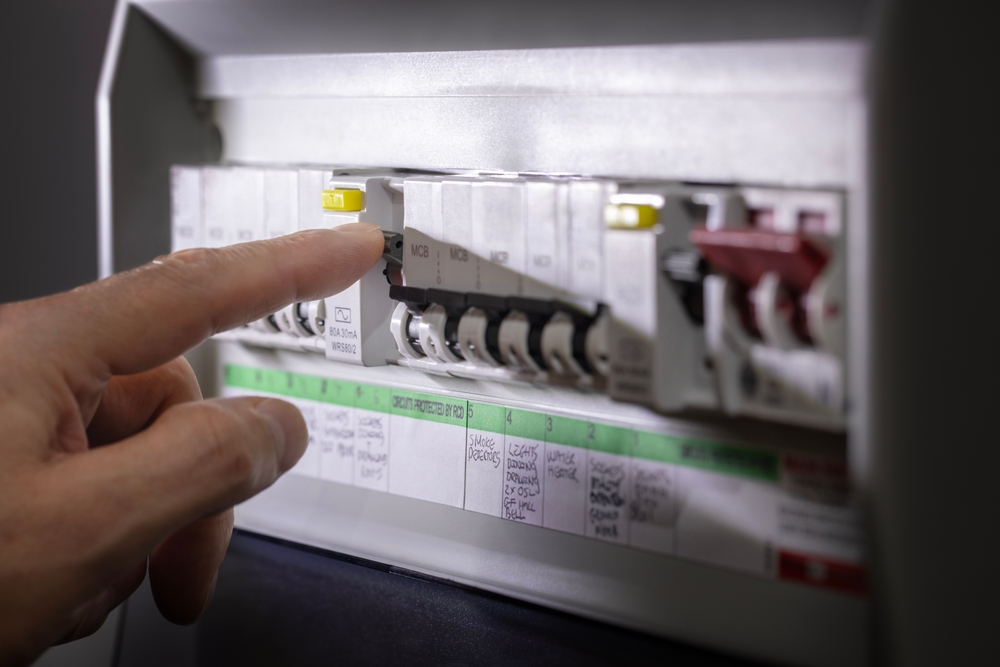
Your main electrical panel controls the flow of power into every room of your house. It houses the circuit breakers designed to shut off power when they detect an overload. In many older homes, the original panels have severely outlived their lifespan or feature fundamentally flawed designs.
Federal Pacific Electric (FPE) and Zinsco Panels
From the 1950s through the 1980s, builders installed millions of Federal Pacific Electric (FPE) Stab-Lok and Zinsco electrical panels in homes across California. Decades later, investigations revealed that these panels are incredibly dangerous.
FPE and Zinsco panels have a documented history of failing to trip during electrical overloads. Instead of cutting the power when a circuit gets too hot, the breakers jam or melt, allowing the current to continue flowing until a fire starts. Furthermore, these panels often experience arcing at the bus bar, where the breaker connects to the main power supply.
If you open your panel door and see the names “Federal Pacific,” “Stab-Lok,” “Zinsco,” or “Sylvania,” you have a major fire hazard on your hands. Home inspectors instantly flag these brands. The only safe and code-compliant solution is a completeelectrical panel upgrade performed by a licensed professional.
Overcrowded Panels and Double-Tapping
Older panels were designed for lighter electrical loads, often maxing out at 60 or 100 amps. Today, most modern homes require a minimum of 200 amps to operate safely.
When homeowners try to squeeze more power out of an inadequate panel, they often resort to dangerous practices. One common code violation is “double-tapping,” which occurs when two wires are jammed into a breaker terminal designed to hold only one. This creates a loose connection and severe arcing risks.
Additionally, older breakers physically wear out over time. They become stiff, corroded, or overly sensitive. If you have breakers that constantly trip, or if your panel feels hot to the touch, you likely need a professional circuit breaker replacement or a complete system overhaul.
The Dangers of Unpermitted DIY Work
Not all code violations stem from the original builder. In many cases, the most dangerous hazards come from previous homeowners attempting to play electrician. DIY electrical work almost always violates local building codes and introduces severe risks.
Flying Junctions and Exposed Wiring
Electrical codes require all wire splices and connections to be housed inside an approved junction box. This box protects the connection from physical damage and contains any sparks if a short circuit occurs.
Amateur handymen often twist wires together, wrap them in electrical tape, and leave them suspended in attics, crawlspaces, or wall cavities. Inspectors refer to these illegal splices as “flying junctions.” They are incredibly dangerous because any rodent activity, structural settling, or moisture can easily disrupt the tape and cause an immediate fire.
Improper Wire Sizing
Wires are rated to carry specific amounts of electricity. A 15-amp circuit requires a specific wire gauge, while a heavier 20-amp or 30-amp circuit requires thicker wire.
Unlicensed individuals frequently use whatever wire they have lying around. Wiring a 20-amp breaker with a wire rated only for 15 amps is a severe violation. The breaker will allow 20 amps of power to flow, but the thin wire will overheat, melt its insulation, and ignite the surrounding wood long before the breaker ever trips.
Modern Life-Safety Device Requirements
Building codes do not just dictate how power flows; they also mandate life-saving technologies that protect residents from shocks and fires. Older homes frequently lack these critical devices.
Missing GFCI Protection
Ground Fault Circuit Interrupters (GFCIs) monitor the electrical current leaving an outlet and returning to the panel. If the GFCI detects even a microscopic imbalance—such as electricity flowing through water or a person—it cuts the power in milliseconds.
Modern code requires GFCI protection in all “wet zones.” This includes bathrooms, kitchens, laundry rooms, garages, basements, and all exterior outdoor receptacles. Older homes built before these mandates often feature standard outlets near sinks, presenting a severe shock hazard.
Lack of AFCI Breakers
Arc Fault Circuit Interrupters (AFCIs) protect against electrical fires caused by arcing. While a GFCI protects you from shocks, an AFCI protects your house from burning down.
Current safety standards require AFCI protection for nearly all living spaces, including bedrooms, living rooms, and dining areas. Upgrading your older electrical panel with AFCI breakers brings your home into compliance and drastically reduces the risk of hidden electrical fires in your walls.
The Real-World Consequences of Code Violations
You might wonder if you can just leave these old systems alone if everything seems to be working fine. Unfortunately, ignoring code violations leads to severe financial and legal roadblocks.
Insurance Denials and Cancelations
Insurance companies analyze risk. If an underwriter discovers your home has knob-and-tube wiring, a Zinsco panel, or an outdated 60-amp service, they view your property as a massive liability.
Many homeowners in Sacramento find their policies canceled or face exorbitant premium hikes after a routine insurance inspection. Carriers will simply refuse to cover the home until a licensed electrician mitigates the specific code violations and upgrades the system to modern standards.
Roadblocks When Selling Your Home
If you plan to sell your vintage property, be prepared for the buyer’s home inspection. Today’s homebuyers are highly educated about safety hazards. When their inspector hands them a report filled with electrical code violations, the transaction stalls.
Buyers will either demand that you fix everything before closing, ask for massive price reductions, or walk away from the deal entirely. Addressing these code violations before you list your property ensures a smooth, profitable sale and prevents last-minute panic.
How to Protect Your Sacramento Home
You do not need to guess about the safety of your home’s electrical system. Proactive maintenance is the key to preserving your historic property and protecting your family.
The most effective step you can take is scheduling a comprehensive electrical inspection in Sacramento. A licensed, experienced electrician will thoroughly evaluate your panel, test your receptacles, trace your wiring in accessible areas, and verify that your smoke and carbon monoxide detectors meet local codes.
After the assessment, you will receive a detailed report outlining any code violations and immediate safety hazards. This information empowers you to prioritize repairs, starting with the most critical life-safety issues like replacing recalled panels or mitigating knob-and-tube wiring.
Trust TNT Electric with Your Historic Home
Navigating the electrical challenges of an older home requires specialized knowledge and extreme attention to detail. You need a contractor who understands the unique construction methods of historic Sacramento properties.
TNT Electric provides premier residential electrical services throughout the Sacramento area. Our licensed, bonded, and highly trained technicians know exactly how to safely upgrade vintage homes without destroying their original charm. We pride ourselves on transparent communication, exceptional craftsmanship, and strict adherence to all local and national building codes.
Do not let hidden electrical hazards threaten your home and your peace of mind. Address those outdated panels, ungrounded outlets, and archaic wiring systems before they cause a disaster. Contact TNT Electric today to schedule your comprehensive home safety evaluation and take the first step toward a safer, code-compliant property.
Our Services at a Glance
At TNT Electric, we are a licensed electrical company based in Citrus Heights, CA, proudly serving the Sacramento area with dependable, professional service.
View Services