

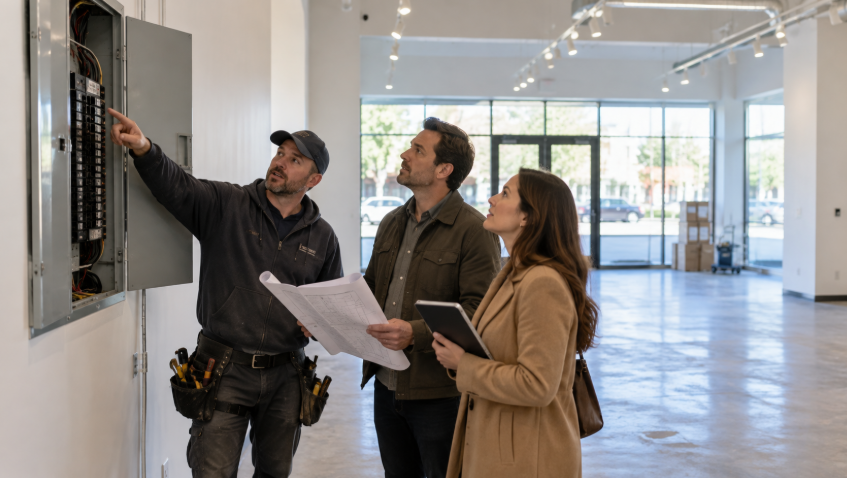
If you’re considering a retail lease in Roseville, the electrical system should be part of your due diligence before you sign. A commercial electrician can look at the service capacity, panel, circuits, lighting, and planned equipment so you know whether the space fits the way you intend to use it. That review matters because a suite that worked well for the last tenant may need significant electrical changes for the next one.
At TNT Electric Co., we work on light commercial projects throughout Roseville and the Greater Sacramento area, including retail and office buildouts and tenant improvements. We often see how much the electrical scope depends on the business moving in, not simply the square footage of the suite.
What a Roseville Commercial Electrician Should Check Before a Retail Lease
1. What electrical service actually reaches the suite?
Start with the electrical service, not the number of outlets you can see from the sales floor.
The service size and voltage determine how much power the space can support. You also need to know how much of that capacity is already committed to lighting, HVAC, existing equipment, and other loads. An electrical panel might have open breaker spaces while the service itself has limited available capacity.
That distinction matters if your business will use equipment the previous tenant did not have. Refrigerated displays, commercial appliances, specialty lighting, production equipment, or other higher-demand loads can change the calculation quickly.
Our tenant improvement electrical work includes load calculations and electrical planning for light commercial spaces. Having those numbers early gives you a better picture of whether the existing service fits the proposed use or whether an upgrade belongs in the buildout scope.
2. What condition is the electrical panel in?
A panel deserves a closer look even when everything in the suite turns on during a walkthrough.
Check its condition, labeling, breaker arrangement, available spaces, and whether the equipment is appropriate for the changes you plan to make. A crowded or poorly labeled panel can complicate future circuit work. Limited breaker space can also affect how easily an electrician can add dedicated circuits.
Ask whether the panel serves only your suite or shares infrastructure with other parts of the building. In some retail centers, the electrical setup involves equipment outside the tenant space, so access and landlord coordination may become part of the project.
If a panel change looks likely, identify that before the lease is final. It is much easier to discuss responsibility for electrical infrastructure while lease terms and tenant improvement allowances are still being negotiated.
3. Which circuits already serve the areas you plan to use?
Visible receptacles do not tell you how the space is circuited.
Several outlets may share one circuit. A stockroom, sales floor, office, display wall, and break area may have been wired around the previous tenant’s layout. Once you move fixtures, add equipment, or change how the rooms function, that arrangement may no longer make sense.
Ask for a clear picture of which circuits serve which areas and whether the panel directory is accurate. If your layout relies on point-of-sale stations, powered displays, workstations, appliances, or other equipment, identify those locations before construction starts.
This is also the time to flag places where you already know you need new receptacles or dedicated power. Our commercial electrical services include circuit installation, troubleshooting, lighting, service work, and electrical upgrades for light commercial properties.
4. Can the existing system support your actual equipment?
Bring an equipment list to the electrical review.
A general description such as “retail store” does not tell an electrician enough. Two stores with the same floor area can have very different electrical demands. A clothing boutique may need mostly lighting and standard receptacles, while another tenant may rely on refrigeration, specialty equipment, multiple dedicated circuits, or 240-volt loads.
For each major piece of equipment, collect the manufacturer specifications when possible. The voltage, amperage, phase, and connection requirements matter. If a piece of equipment requires three-phase power and the suite does not have it, that can turn into a much larger planning issue than adding another wall outlet.
The earlier you match the equipment plan to the electrical system, the less likely you are to discover a major mismatch after the lease is signed.
5. Will your lighting plan trigger electrical or energy-code work?
Retail lighting often changes during a tenant improvement. You may want brighter display lighting, new track lighting, different fixture locations, illuminated signage, occupancy controls, or a completely different sales-floor layout.
Do not assume the existing lighting can simply stay in place because the fixtures work.
California’s 2025 Building Energy Efficiency Standards apply to permit applications submitted on or after January 1, 2026. Depending on the scope of a commercial alteration, lighting changes can involve current energy-code requirements for controls and other components.
TNT handles Title 24-related electrical work as part of our tenant improvement services. Before finalizing a lighting plan, identify what will remain, what will move, and what you want to add. That gives the electrical scope a much firmer starting point.
6. Who is responsible for electrical upgrades under the lease?
An electrician can identify the work. Your lease should identify who is responsible for it.
If the space needs a larger service, panel work, new circuits, lighting changes, or other electrical improvements, clarify how those items fit into the landlord’s work, the tenant’s work, and any tenant improvement allowance. Do not assume that existing building infrastructure automatically falls on one party.
The same applies to access. Some electrical equipment may sit in a common electrical room or another landlord-controlled area. Utility coordination or shutdowns may also require building management involvement.
Your broker or attorney should handle the lease language. From the electrical side, a defined scope gives that conversation something concrete to work from. You can discuss an identified service upgrade much more clearly than a vague possibility that “some electrical work” may be needed later.
7. What permits and inspections could affect the opening schedule?
A retail buildout can involve more than installation time.
The City of Roseville has a permitting process for commercial tenant improvements, and its Development Services guidance asks for project details such as the address, scope of work, square footage, and occupancy information when preparing commercial tenant improvement fee estimates.
Electrical work that becomes part of a larger remodel may need to coordinate with the overall permit package, plan review, inspections, and other trades. The exact path depends on the project.
That makes the opening date an electrical planning question too. If you need panel work, added circuits, lighting changes, or service modifications, find out how those items fit into the permitting and construction sequence before you commit to an aggressive move-in schedule.
Review the Electrical Scope Before the Lease Is Final
A retail space can look ready to occupy and still need electrical work once your real equipment, lighting, and layout enter the picture. Before signing, get clear answers about service capacity, panel condition, circuit layout, equipment requirements, lighting changes, responsibility for upgrades, and permitting.
If you’re evaluating a retail space in Roseville, TNT Electric Co. can review the electrical system in the context of your planned buildout and help define the work that may be required. Contact us before the electrical scope gets buried inside a signed lease and a fixed opening date.
Our Services at a Glance
At TNT Electric, we are a licensed electrical company based in Citrus Heights, CA, proudly serving the Sacramento area with dependable, professional service.
View Services

