



Yes, you can often move your electrical panel during an upgrade if the new spot meets electrical code and any utility requirements that apply. Electrical panel relocation gets more involved when the meter has to move too or when the existing circuits take a different route through the house. At TNT Electric Co., we upgrade and relocate electrical panels in Citrus Heights and the Greater Sacramento area. If you have a wall in mind, bring it up during the first assessment so we can look at both locations before quoting the work.
When Does Electrical Panel Relocation Make Sense?
A remodel is a common reason to move a panel. You might be taking down the wall that holds the breaker box, turning part of the garage into living space, or adding cabinets that would block access. If the layout will change, show your electrician the finished floor plan. A spot that’s clear today may be too tight once the cabinets go in or a new door swings open.
Sometimes the upgrade brings an existing problem to light. A previous addition may have left the panel in a cramped spot, or you might have to move storage every time you need to reach a breaker. Moving the panel while you’re already replacing it gives you a chance to fix that access problem. If the existing location will still work after the remodel and meets the requirements for the new equipment, keeping it there usually means less work on the wiring.
Do You Have to Move the Meter Too?
The meter measures how much electricity your home uses. The breaker panel distributes power to the circuits in your house. In some homes, both sit in one enclosure on an outside wall. In others, the meter stays outdoors and a separate breaker panel sits inside, often in the garage.
If you have a separate indoor panel, it may be possible to move it and leave the meter in place. Your electrician will need to check where the main disconnect is, how power reaches the panel, and whether the existing circuits can reach the proposed location. A separate meter gives you another option to evaluate, but the wiring layout still determines how practical the move is.
If the meter and breakers share a box, ask whether the project needs to move both. Depending on the house, you might be able to keep the meter and service equipment at an approved exterior location and put a separate breaker panel somewhere more accessible. That’s worth discussing if you mainly want the breakers out of the way of a remodel. It may solve the layout problem without changing where utility power reaches the house.
What Makes a New Panel Location Work?
Start with access. An electrician needs clear working space in front of the equipment, and you need to be able to get to the breakers once the room is in use. A bare garage wall can look like a good spot until you account for the workbench going underneath it or the freezer that will sit in front of it. If the move includes an outdoor meter, the utility also needs access to its equipment.
Next, consider where the wires run. Moving a panel a few feet along the same wall may be simpler than taking it around a corner or across the garage. Even a short move can involve extra work if the existing wires are too short or run through a finished part of the house. Depending on what the electrician finds, some circuits may need extensions or new wiring. Ask which walls or ceilings the crew would need to open so you can plan the repair before work starts.
The utility connection matters if the service equipment moves. With overhead service, the proposed location has to work with the route and clearances of the incoming line. With underground service, the question is whether the existing route can serve the new spot. Moving equipment to the other side of the house could mean new conduit and trenching, even if that wall looks like the easiest place to mount the panel.
How Do Permits and SMUD Affect the Move?
Plan on a permit and inspection for a panel relocation in Citrus Heights. When the move affects the meter or the incoming service, bring SMUD into the planning early. Its meter and service guide explains how the utility checks whether its existing facilities can serve the project and how local inspection approval fits into reconnection.
Ask about the time needed to prepare for the move and the time your home will actually be without power. Utility review or trenching may take place before the main electrical work. The outage itself depends on the work at the house and when inspection and reconnection can happen. If the remodel involves several trades, ask which work can go ahead while you’re waiting on the panel so you can plan around it.
What Should You Compare Before Approving the Move?
If the current location is still viable, ask for an in-place upgrade and a relocation option. Our guide to what’s included in an electrical panel upgrade quote explains what a standard quote should cover. For the relocation option, look for the proposed location, what happens to the meter, and how the electrician plans to get the existing circuits to the new panel.
Ask who will patch the old opening and any surfaces that need to come apart for wiring access. Removing an exterior panel can leave an opening in the stucco or siding. If the project calls for trenching, clarify who will restore the landscaping or pavement along the route. Those details make it easier to compare the total work and line up any repairs before the electrical crew arrives.
If you mainly need circuits for a workshop or addition, ask whether a subpanel installation would address that need. A subpanel can put breakers closer to the area they serve while keeping the main equipment in place, provided the existing service can support the added load. It won’t solve an access problem at the main panel, so start by deciding what you want the move to accomplish.
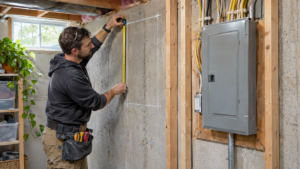
Pick the Location Before the Remodel Locks It In
If you’re planning a panel upgrade in Citrus Heights or nearby, contact us for a panel assessment and show us where you’d like the new panel to go. If there’s a second spot you’d consider, point that out too. We can look at the panel, meter, and wiring routes and explain how each location changes the scope.
Before you order cabinets, close up walls, or pour concrete along a possible trench route, confirm where the panel will go and whether the meter can stay. Those two decisions give your electrician and remodel contractor a layout they can both work from.
Our Services at a Glance
At TNT Electric, we are a licensed electrical company based in Citrus Heights, CA, proudly serving the Sacramento area with dependable, professional service.
View Services

