



A bathroom exhaust fan buzzing or rattling usually has a loose, dirty, worn, or vibrating part. A light rattle might come from the grille, while a steady hum or grinding sound can point to a motor or electrical issue. At TNT Electric Co., we’ve replaced bathroom exhaust fans in Sacramento-area homes, and the first step is to identify where the sound comes from.
Common causes of bathroom exhaust fan buzzing
The sound itself can offer clues, but it won’t confirm the cause on its own. Notice whether the noise starts as soon as you switch the fan on, changes as it runs, or continues after you turn it off.
A loose grille or mounting part
A loose cover, screw, spring clip, or fan housing can vibrate as the fan runs. The vibration may sound like a rattle or buzz, especially if the grille touches the ceiling or the housing shifts slightly.
With the fan off, check whether the grille sits evenly and feels secure. Don’t remove the cover unless you can do so safely and follow the fan manufacturer’s instructions. If the housing moves, or you can’t tell what’s loose, leave it for a professional to inspect.
Dust or debris near the fan blades
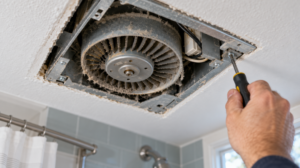
Dust can collect on the grille and fan assembly over time. That buildup can restrict airflow or make the rotating parts vibrate unevenly. You might hear a rougher sound than usual, or notice that the fan moves less air.
If the manufacturer permits cleaning, turn off power to the fan at the breaker first. Remove only the parts the manual identifies as user-serviceable, and use a vacuum or soft brush. Don’t reach into the housing or touch wiring. If the sound continues after cleaning, the cause may be deeper in the assembly.
A worn motor or blower
A motor that has worn bearings or other damaged parts can make a steady hum, squeal, grind, or buzz. The fan may also take longer to start or sound louder than it used to. These signs often develop gradually, though a sudden change deserves attention too.
A noisy motor usually needs inspection and may require a repair or replacement. Avoid spraying lubricant into the fan unless the manufacturer specifically recommends it. A product that doesn’t suit the motor can create another problem.
A vibrating housing or duct
Sometimes the fan itself works normally, but the housing or duct vibrates against nearby framing. A loose connection, unsupported duct, or tight bend can also add noise as air moves through the system.
The U.S. Department of Energy’s bath-fan ducting guidance recommends a short, smooth duct run and support that prevents bending and sagging. If the noise seems to come from above the ceiling or near the roof or wall vent, don’t pull down the duct to investigate. An electrician or ventilation professional can check the installation safely.
An electrical connection or control issue
A low hum that comes from the switch, or a buzz that starts when the fan turns on, can indicate an electrical issue. A dimmer, timer, or speed control that doesn’t match the fan can also cause trouble. If you hear buzzing when the fan is off, or see flickering, warm switch plates, or a burning smell, stop using the fan and arrange an electrical inspection.
The noise may come from a mechanical part rather than wiring, so don’t assume the motor is failing. Our electrical troubleshooting service can diagnose electrical symptoms such as buzzing, flickering, or intermittent operation.
What you can check safely
Start with the simple observations. Note whether the sound comes from the grille, the switch, or the ceiling cavity. See whether the fan still moves air and whether the noise changes when you open the bathroom door. These details help narrow down what an electrician should inspect.
With power off at the breaker, you can clean accessible dust if the manual allows it. You can also make sure the grille sits evenly and doesn’t rattle against the ceiling. Don’t remove wiring covers, reach into the fan housing, or tighten parts you can’t identify. If you smell burning, see sparks, feel heat at the switch, or the breaker trips, leave the fan off and call a licensed electrician.
When should you replace a noisy bathroom fan?
A fan doesn’t need replacement just because it makes noise. A loose cover or dust buildup may explain a minor rattle. If the motor grinds, the fan vibrates heavily, or the sound returns after basic cleaning, have the unit inspected. A technician can check whether a repair makes sense or whether the fan, housing, or wiring needs attention.
Replacement can also make sense when the fan no longer clears moisture well or has become disruptive to use. The new unit must fit the opening and connect properly to the duct and electrical supply. If you’re remodeling, include fan placement and wiring in the electrical plan along with lighting and switches. Our electrical remodel services cover wiring and fixture work for bathroom remodels.
Don’t ignore a fan that suddenly gets louder
A bathroom exhaust fan buzzing or rattling often points to a fixable issue, but the noise alone can’t tell you whether it’s a loose grille, a worn motor, a duct problem, or an electrical fault. Check only the accessible parts the manufacturer identifies as safe to clean, and shut off the fan if you notice heat, a burning smell, sparks, or repeated breaker trips.
At TNT Electric Co., we’ve replaced bathroom exhaust fans with quieter models in Sacramento-area homes. If the fan’s noise persists or appears electrical, contact our team to discuss an inspection or replacement. A clear description of when the sound starts and where it seems loudest gives us a practical place to begin.
Our Services at a Glance
At TNT Electric, we are a licensed electrical company based in Citrus Heights, CA, proudly serving the Sacramento area with dependable, professional service.
View Services

