


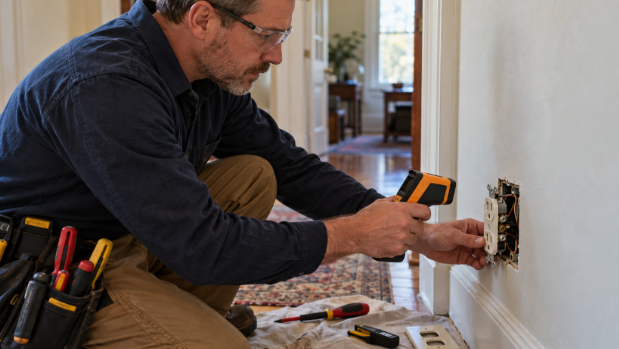
A hot electrical outlet with nothing plugged into it usually means electricity is still moving through the outlet or its electrical box. That outlet may feed other receptacles, lights, or devices farther along the same circuit. A loose connection, damaged receptacle, failing wire splice, or overloaded circuit can create heat even though the outlet appears unused. If the cover plate feels noticeably hot, stop using the circuit and arrange for an electrician to inspect it.
At TNT Electric Co., we troubleshoot outlets and circuits for homeowners in Citrus Heights and throughout the Greater Sacramento area. An unused outlet that feels warm is easy to overlook, but heat gives us useful information about what may be happening behind the wall.
Why a Hot Electrical Outlet Can Still Carry Current
Nothing needs to be plugged into the front of a receptacle for electricity to pass through its connections.
Residential circuits often connect several outlets, lights, or switches in sequence. Power enters one electrical box and then continues through that box to other devices on the same circuit. Electricians sometimes describe this as a downstream connection.
For example, the unused outlet in a bedroom may sit between the electrical panel and another outlet powering a television in the next room. The first outlet still carries current for that downstream load. If one of its connections has loosened, electrical resistance at that point can produce heat.
This explains why the warm outlet may seem unrelated to the device causing the load. The lamp, heater, vacuum, or entertainment system drawing power could be connected somewhere else on the circuit.
The U.S. Consumer Product Safety Commission specifically warns that an unused receptacle may become hot because power delivered to another receptacle passes through its connections. Its guide to home wiring hazards recommends discontinuing use and contacting a qualified electrician when an outlet or switch becomes uncomfortably hot.
A Loose Connection Is a Common Cause
A secure electrical connection allows current to move with little resistance. When that connection becomes loose, electricity has a harder time crossing the contact point. The resistance creates heat.
The loose point could be:
- A wire that no longer sits tightly under a terminal screw
- A push-in connection that has deteriorated
- A loose splice inside the electrical box
- A worn connection inside the receptacle
- Damage where the receptacle connects to downstream wiring
Loose connections can worsen as the circuit heats and cools during normal use. Expansion, contraction, vibration, previous repairs, and age can all affect the connection over time.
Replacing the visible receptacle without checking the wires and splices behind it may miss the real problem. Electrical troubleshooting should identify exactly where the heat begins and whether nearby devices show the same condition.
The Receptacle May Be Worn or Damaged
Receptacles don’t last forever. Internal metal contacts can wear down, plastic components can deteriorate, and past overheating may leave damage that isn’t obvious from across the room.
A receptacle deserves attention if it also has:
- Darkening around the slots
- A cracked or warped face
- A buzzing or crackling sound
- A burnt or sharp plastic smell
- Plugs that fit loosely
- Intermittent power
- Heat that returns after the circuit has been lightly used
Discoloration or melting suggests the outlet has already experienced excessive heat. Don’t test it by plugging something in. Leave it alone until an electrician can evaluate the receptacle, wiring, and circuit.
If the outlet has also been cutting in and out, our guide to an outlet losing power while the breaker stays on explains why a loose connection or worn receptacle may cause intermittent operation.
The Load May Be Somewhere Else on the Circuit
An outlet circuit rarely serves just one receptacle. Depending on the home’s layout and wiring, the same breaker may supply several bedroom outlets, hallway lights, or receptacles in an adjoining room.
A high-draw appliance connected elsewhere can send substantial current through the wiring behind the unused outlet. Portable heaters, window air conditioners, vacuums, hair dryers, and similar equipment place a larger load on a circuit than lamps or phone chargers.
The breaker may remain on because the total current hasn’t exceeded its trip rating. A poor connection at one outlet can still overheat locally. Circuit breakers respond to certain electrical conditions, but they don’t guarantee that every connection along the circuit remains tight and undamaged.
Pay attention to when the outlet becomes hot. Does it happen while someone uses a heater in another room? Does the temperature change when the vacuum runs? Does it cool overnight and warm again during the day?
Those details give the electrician a better starting point. They don’t replace electrical testing, but they may reveal which downstream load is involved.
Could the Heat Come From Something Nearby?
Sometimes the outlet cover feels warm because of a nearby heat source rather than an electrical fault. Sunlight, a heating duct, a hot appliance on the other side of the wall, or a poorly insulated exterior wall can affect the surface temperature.
Compare the outlet with nearby wall surfaces and other receptacles under similar conditions. If the cover plate feels much warmer than the surrounding wall, treat it as an electrical concern.
A specialty receptacle with built-in USB charging components may also contain electronics that remain energized without a cable connected. Slight warmth isn’t the same as a cover plate that feels hot or uncomfortable to touch. Strong heat, odor, noise, discoloration, or recurring temperature changes require inspection.
Don’t remove the cover plate or pull the outlet from the box to investigate. Live terminals may sit close to the sides of the electrical box even when nothing is plugged in.
What to Do When an Unused Outlet Feels Hot
Stop using the outlet and anything else that shows signs of heat or damage. Keep furniture, curtains, paper, and other combustible material away from it.
If you know which breaker controls the outlet and can reach the panel safely, switch that breaker off. Leave it off if the outlet smells burnt, appears discolored, makes noise, or feels very hot. Don’t repeatedly turn the breaker back on to see whether the problem returns.
Call for urgent electrical service if you notice smoke, sparks, melting, active arcing, or a strong burning smell. Leave the area and contact emergency services if you believe a fire has started.
Avoid these temporary responses:
- Covering the outlet with furniture
- Using another receptacle on the same circuit without checking it
- Replacing the breaker with a larger one
- Tightening live wiring yourself
- Assuming the problem ended because the outlet cooled down
- Resetting a breaker that repeatedly trips
Cooling only shows that the electrical load changed or the circuit was turned off. It doesn’t repair the loose connection or damaged component that produced the heat.
Why the Breaker Might Not Trip
Homeowners often expect any electrical problem to trip the breaker immediately. A hot outlet doesn’t always behave that way.
The circuit may be drawing less current than the breaker’s rating while resistance at one small connection creates concentrated heat. From the panel’s perspective, the total load may still appear acceptable. At the outlet, however, the loose or damaged connection can continue getting hotter.
A breaker may trip if the problem develops into a short circuit, ground fault, or sufficient overload. Waiting for that to happen allows the connection to deteriorate further.
If the breaker does trip and refuses to stay on, don’t force it. Our article about why a circuit breaker won’t reset covers what that behavior may indicate and when to leave the circuit off.
What an Electrician Checks
An electrician starts by confirming which circuit serves the outlet and what else receives power from it. That circuit map matters because the source of the load may sit in another room.
Testing may include checking:
- The temperature of the receptacle and surrounding connections
- The condition of the receptacle body
- Terminal screws and wire connections
- Splices inside the electrical box
- Voltage and circuit behavior under load
- Other outlets upstream and downstream
- The breaker and its connection inside the panel
- Signs of arcing, damaged insulation, or previous overheating
The repair depends on what the testing finds. The outlet may need replacement, or the problem may involve a loose splice, damaged wiring, another device on the circuit, or a breaker connection. One hot outlet doesn’t automatically mean the home needs rewiring or a new electrical panel.
At TNT Electric Co., our electrical troubleshooting service focuses on finding the source before recommending a repair.
Have a Hot Electrical Outlet Checked
An outlet should not become hot simply because other devices on the circuit are running. If an unused receptacle feels noticeably warmer than the surrounding wall, stop using the circuit and take the condition seriously.
Note when you first noticed the heat, which appliances were operating elsewhere, and whether the outlet has shown discoloration, odor, noise, or intermittent power. Those details are useful, but don’t keep energizing the circuit to recreate the problem.
If you’re in Citrus Heights or the Greater Sacramento area, contact TNT Electric Co. to schedule electrical troubleshooting. We’ll inspect the outlet, identify what the circuit supplies, and determine whether the heat comes from the receptacle, a connection behind it, the wiring, or another part of the circuit.
Our Services at a Glance
At TNT Electric, we are a licensed electrical company based in Citrus Heights, CA, proudly serving the Sacramento area with dependable, professional service.
View Services

