

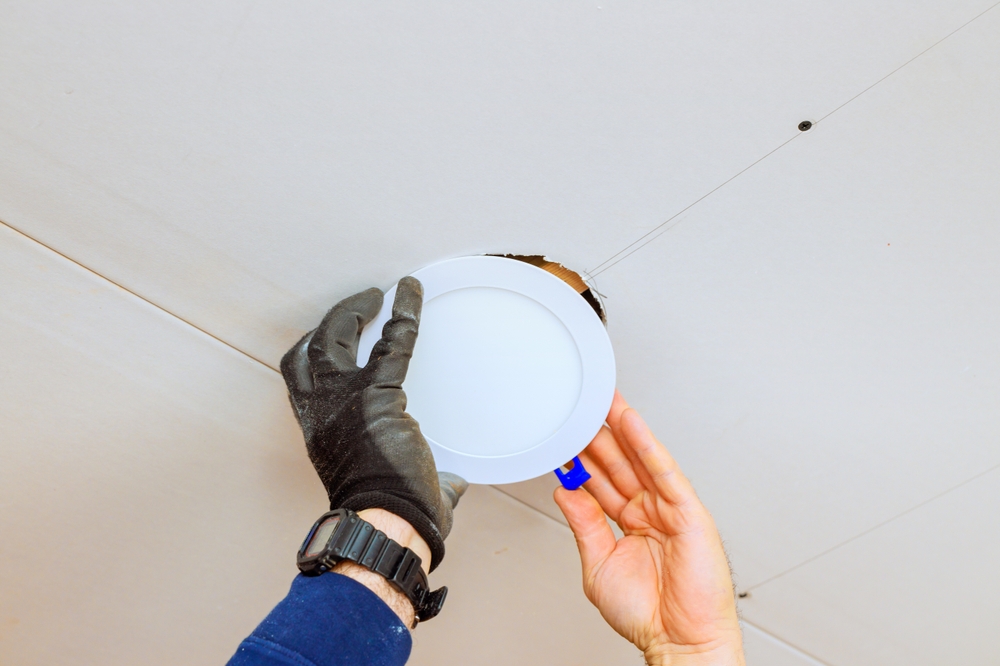
Upgrading your home with sleek, modern lighting dramatically transforms how your space feels and functions. Recessed lighting offers a clean, uncluttered look that brightens up dark rooms and highlights your favorite architectural features. However, planning a lighting upgrade requires a clear understanding of the financial investment involved.
Determining the exact cost of a lighting project depends on several specific variables unique to your property. Sacramento homeowners face distinct regional factors, from local labor rates to the specific needs of different neighborhood housing styles. This comprehensive guide breaks down the true cost of bringing high-quality downlighting into your home.
By the end of this guide, you will understand how electricians calculate pricing. You will learn the difference between material costs and labor fees, and you will see how the physical structure of your home influences the final bill. We aim to give you the clarity you need to budget effectively for your next major home improvement project.
Average Cost Breakdown for Sacramento Homeowners
When budgeting for a lighting upgrade, it helps to look at the project from two distinct angles: materials and labor. Electricians generally price recessed lighting projects on a per-fixture basis. In the greater Sacramento area, homeowners can expect to pay anywhere from $150 to $350 per light for standard installations.
This broad price range accounts for the vast differences in home layouts and fixture qualities. A simple installation in a single-story home with an accessible attic will land on the lower end of that spectrum. A complex installation requiring extensive drywall patching or wiring in an older, multi-story home pushes the price higher.
Understanding what goes into this per-fixture rate helps you make informed decisions. Let us look closer at the specific components that make up your final invoice.
Labor Rates in the Greater Sacramento Area
Labor typically makes up the most significant portion of any professional electrical project. Licensed, bonded, and insured electricians bring years of specialized training to your home. In Sacramento, standard hourly rates for a qualified electrician range between $90 and $150 per hour.
Installing a single recessed light can take an experienced professional anywhere from one to three hours. The time required depends heavily on how easily they can route the new electrical wire from your power source to the ceiling location. Electricians must carefully cut holes, pull wire through wall cavities, and connect everything safely to your main power supply.
When you hire a professional for recessed lighting installation, you pay for their efficiency and expertise. They know how to minimize damage to your drywall and ceiling texture. This careful approach saves you significant money on post-installation cosmetic repairs.
Material Costs: Fixtures, Bulbs, and Wiring
The physical components of your lighting system make up the rest of the project cost. A basic recessed light consists of a housing unit (the part hidden above the ceiling) and a trim piece (the visible ring around the bulb). Basic, standard-grade fixtures cost between $20 and $50 each.
However, technology has shifted rapidly toward integrated LED units. These modern fixtures combine the housing, trim, and light source into one ultra-thin, energy-efficient package. High-quality LED fixtures generally cost between $35 and $80 each. While they carry a slightly higher upfront cost, they last for decades and drastically reduce your monthly energy consumption.
You must also account for the hidden materials. Your electrician needs specialized copper wiring, junction boxes, wire nuts, and new dimmer switches to complete the job. These supplementary materials typically add $20 to $40 per fixture to your overall total.
Key Factors Influencing Your Installation Cost
No two homes are exactly alike, and no two electrical projects share the exact same parameters. The base price provides a helpful starting point, but your specific home architecture dictates the final number.
Electricians evaluate several logistical challenges before providing a firm quote. They look at how your house is built, how old your wiring is, and exactly what you want to achieve with your new lighting layout. Understanding these variables helps you anticipate potential cost increases.
Ceiling Access and Attic Space
The most significant factor influencing labor time is ceiling access. If you have an unfinished attic directly above the room where you want the new lights, the installation becomes incredibly straightforward. The electrician can simply climb into the attic, run the necessary wire, drop it down to the exact locations, and connect the fixtures.
First-floor rooms in a two-story house present a much bigger challenge. Because there is a finished floor directly above the ceiling, the electrician cannot simply drop the wire from above. They must fish the wire through the narrow space between the floor joists.
This process often requires cutting small access holes in your drywall to help guide the wire around obstacles like plumbing pipes or HVAC ducts. While skilled professionals keep these access holes to an absolute minimum, you will need to patch and paint them afterward. This adds a secondary cost to your overall project budget.
Wiring Complexity and Age of Your Home
The condition of your existing electrical system plays a massive role in your project costs. If you live in a relatively new home, your electrician can often tap into an existing lighting circuit to power your new fixtures. LED lights draw very little power, making this a safe and simple option for modern electrical systems.
Older homes often tell a different story. If your home still utilizes outdated knob-and-tube wiring, or if your existing circuits lack proper grounding, tying new fixtures into the old system violates building codes. You cannot safely mix modern lighting with obsolete, unsafe wiring.
In these situations, your electrician must run a brand-new, dedicated circuit directly from your main electrical panel to your new lights. Running a new circuit significantly increases the amount of wire needed and the labor hours required to install it. If you suspect your home has older wiring, scheduling a thorough electrical inspection in Sacramento provides vital information before you begin planning your lighting design.
Total Fixture Count
Economics of scale apply to electrical work. Installing a single recessed light will cost more per fixture than installing two dozen lights throughout your home.
When an electrician visits your home, you pay for their travel time, setup, and troubleshooting. If they only install one light, all those overhead costs apply to that single fixture. If they install twenty lights, those base costs spread out across the entire project.
If you plan to upgrade multiple rooms, tackling them all at once proves much more cost-effective. You save money by consolidating the labor and streamlining the installation process.
Types of Sacramento Homes and Their Unique Lighting Needs
Sacramento boasts a diverse architectural landscape. The age and style of your home directly impact the complexity of your electrical upgrades. Electricians approach a historic bungalow very differently than they approach a modern suburban build.
Knowing the unique traits of your specific neighborhood helps you understand why certain installation methods—and costs—apply to your project.
Historic Homes in Midtown and East Sacramento
Homes built in the early 20th century feature incredible charm and character. However, they also feature lath-and-plaster ceilings. Plaster is incredibly dense, heavy, and brittle compared to modern drywall.
Cutting precise circles for recessed lights into a plaster ceiling requires specialized tools and extreme patience. If a contractor rushes the job, the plaster can crack or crumble, leading to expensive repairs. Electricians must work slowly and methodically in historic homes, which naturally increases the labor hours required for the job.
Additionally, these older homes frequently lack the deep ceiling cavities found in modern construction. Electricians often recommend ultra-thin, “canless” LED fixtures for these properties because they can slide into spaces less than two inches deep, bypassing shallow framing completely.
Modern Builds in Elk Grove and Folsom
Newer homes in the surrounding suburbs present far fewer structural challenges. Built with standard drywall and predictable joist spacing, these homes make cutting and wiring much easier.
However, modern homes often feature vaulted or cathedral ceilings. While visually stunning, high ceilings require tall ladders or specialized scaffolding to reach safely. Working at height slows down the installation process and requires additional safety precautions.
Vaulted ceilings also impact the type of fixture you need. Because the ceiling sits on an angle, you must use specialized “gimbal” or adjustable trims. These trims allow you to tilt the internal bulb so the light shines straight down to the floor, rather than glaring directly into your eyes. These specialized angled trims cost slightly more than standard flat trims.
Electrical Upgrades: When You Need More Power
Adding new fixtures changes the electrical demand on your home. Even highly efficient LED lights pull a small amount of electricity. If your home’s electrical infrastructure is already operating at maximum capacity, you cannot safely add new loads without making critical upgrades first.
Failing to address power capacity leads to constant nuisance tripping. Worse, overloaded circuits generate excess heat, creating a severe fire hazard behind your walls.
Panel Upgrades
Your main electrical panel acts as the brain of your home’s power system. It receives electricity from the utility company and distributes it safely to your various circuits. Many older homes still operate on 100-amp or even 60-amp panels.
Modern households, filled with high-definition televisions, heavy-duty appliances, and central air conditioning, require at least 200 amps of total service. If your current panel lacks the physical space for new circuit breakers, or if it cannot handle the increased electrical load, you must upgrade the equipment.
An electrical panel upgrade is a major project that ensures your entire home operates safely. While it adds a significant cost to your initial lighting project, it future-proofs your home and protects your expensive electronics from power fluctuations.
Circuit Breaker Updates
Sometimes, your main panel has plenty of total capacity, but the specific circuit you want to use is already full. For example, if your living room circuit already powers your television, your sound system, and multiple floor lamps, adding ten new ceiling lights might push that specific breaker over its limit.
In this scenario, your electrician will recommend a circuit breaker replacement or the installation of a new, dedicated breaker just for your lighting. Upgrading an individual breaker costs much less than replacing an entire panel, but it still requires professional expertise to ensure the new breaker matches the specific gauge of your home’s wiring.
Navigating Local Permits and Code Compliance
Electrical work is strictly regulated to protect homeowners from fire hazards and electrocution. In Sacramento County, significant electrical modifications require a building permit and a subsequent inspection from a city or county official.
Permit requirements vary depending on the scope of your project. Swapping out an existing light fixture for a new one rarely requires a permit. However, cutting into walls, running brand-new wire, or adding new circuits almost always triggers permit requirements.
Permit fees add to your total project cost. Depending on your specific municipality, these fees generally range from $50 to $150. Your licensed electrical contractor will typically handle the permit application process for you, factoring the fee into your final estimate.
Bypassing the permit process to save a few dollars is a dangerous mistake. Unpermitted electrical work violates local codes and can void your homeowner’s insurance policy. Furthermore, when you eventually try to sell your home, unpermitted work will turn up during the buyer’s inspection, potentially derailing the sale.
The Value of Professional Installation
Home improvement stores sell recessed lighting kits that make the process look incredibly easy. Online tutorials suggest that anyone with a drywall saw and a pair of wire strippers can complete the job over a weekend.
However, electrical work is inherently dangerous. A minor mistake in wiring can lead to catastrophic consequences. Hiring a professional contractor provides value that extends far beyond simply getting the lights turned on.
Safety First: Avoiding Electrical Hazards
Electricity does not offer second chances. Working with live wires carries a massive risk of severe shock or electrocution. Professional electricians spend years learning how to test circuits, isolate power sources, and work safely within high-voltage environments.
Beyond immediate physical safety, professionals ensure the long-term safety of your home. They know how to properly calculate electrical loads to prevent wires from overheating. They understand the critical importance of proper grounding. They also know which fixtures are safe to install near heavy attic insulation (IC-rated fixtures) and which ones pose a fire risk.
By utilizing professional electrical services, you eliminate the anxiety of wondering if your wiring is truly safe. You pay for the certainty that your home and your family remain protected from hidden electrical fires.
Long-Term Reliability and Peace of Mind
Professional installations simply perform better and last longer. Experienced electricians know how to properly secure fixtures so they do not sag or shift over time. They utilize high-quality wire nuts and connection methods that withstand decades of use without shaking loose.
When you hire a licensed contractor, you also receive warranties on both the materials and the labor. If a fixture fails or a switch stops working shortly after installation, the contractor returns to fix the problem at no additional cost to you. DIY installations offer no such protections; if something goes wrong, you bear the total cost of fixing the mistakes.
Ultimately, recessed lighting is an investment in your home’s value and your daily comfort. Properly installed downlighting creates a bright, welcoming environment that makes every room feel larger and more inviting. By understanding the costs involved and trusting the process to local Sacramento experts, you ensure a flawless, stress-free upgrade that you will enjoy for years to come.
Our Services at a Glance
At TNT Electric, we are a licensed electrical company based in Citrus Heights, CA, proudly serving the Sacramento area with dependable, professional service.
View Services

